Conflict Resolution

Conflict is a situation in which seemingly incompatible elements exert force in opposing or divergent directions.
Resolution is the attainment of a solution that satisfies the requirements of all the seemingly conflicting forces and thereby produces a feeling of closure for all participants.
Within a business context, conflict resolution has traditionally referred to a situation where each party starts out at a position apart from the other and through a process of compromise; the parties arrive at a middle position. Often neither got what it really wanted, and neither was particularly happy with the outcome. (See fig. 1).
Conflict resolution does not need to involve compromise, which can end up representing a lose-lose situation for both parties. It can involve creative solutions that lead to win-win.
Conflicts, within and between people are a behavioral manifestation of emotional distress; resolution depends on understanding what is causing the emotional distress that is driving the conflict.
Conflict exists if people think it exists, even if the situation does not in fact include inherent contradictory factors.
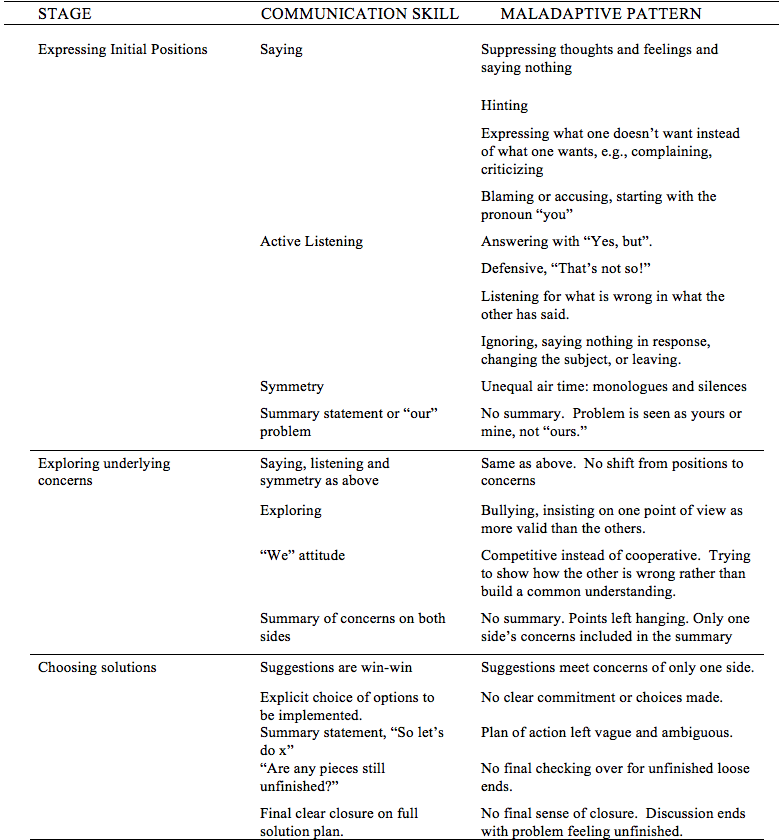
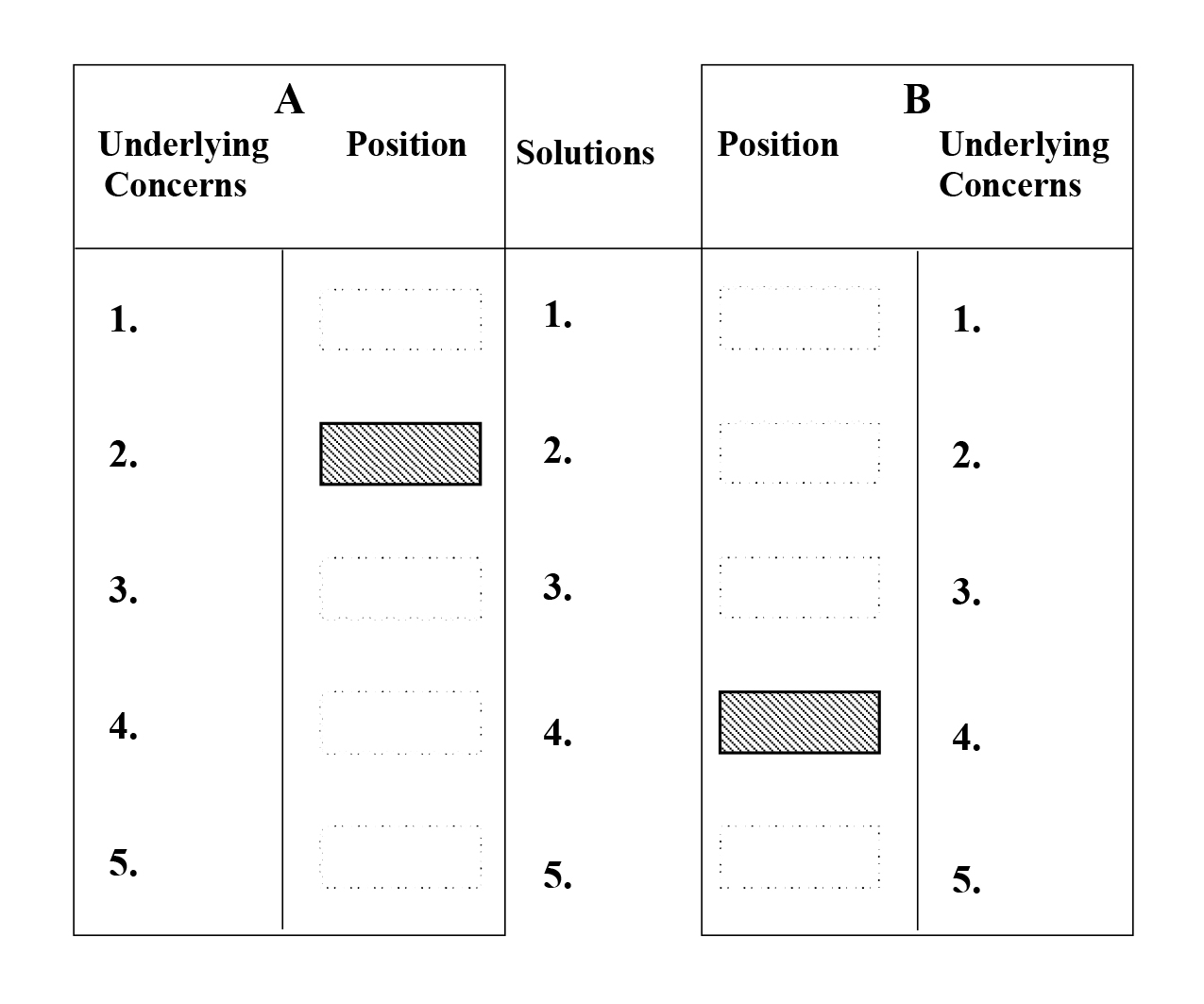
A simple model is introduced in figure 2 which anyone can use for achieving conflict or dispute resolution. It will work every time provided that all parties are truly committed to a resolution.
The process begins with party ‘A’ expressing its initial position, usually by just saying what it wants. The party ‘B’ listens and acknowledges or validates party ‘A’s position. Party ‘B’ then states its position followed by party ‘A’s acknowledgment. Each party gets equal air time (symmetry). A summary statement emerges that accurately describes “our problem”.
The next step involves exploring and identifying the underlying concerns behind each position through saying, active listening and symmetry as above. A co-operative “we” attitude rather than a competitive one is assumed. When all underlying concerns have been articulated, a summary statement follows, reflecting that a shared understanding of the underlying issues has occurred. It is common for solutions to have begun to evolve during this step.
In step three, the list of solutions that meet the needs of both sides is completed. An explicit choice of options to be implemented is made followed by a summary statement.
Unfinished loose ends are identified and incorporated into the action plan. Final clear closure on the full solution thus occurs, and the problem “feels” finished.
Figure 1:
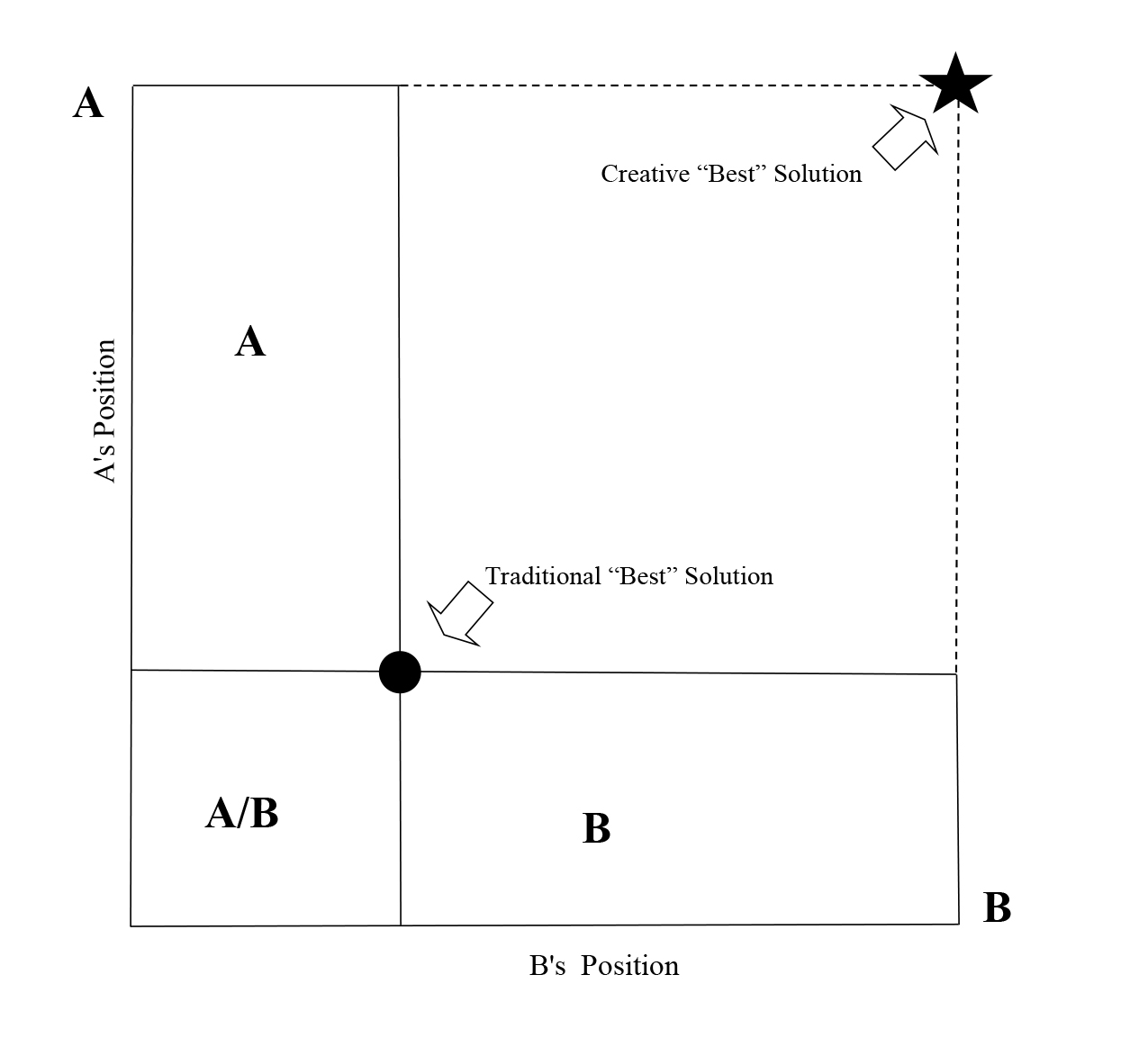
Figure 2:
Checklist of Communication Skills and Maladaptive Habits